Newsletter Subscribe
Enter your email address below and subscribe to our newsletter
Enter your email address below and subscribe to our newsletter

 ByJohn A
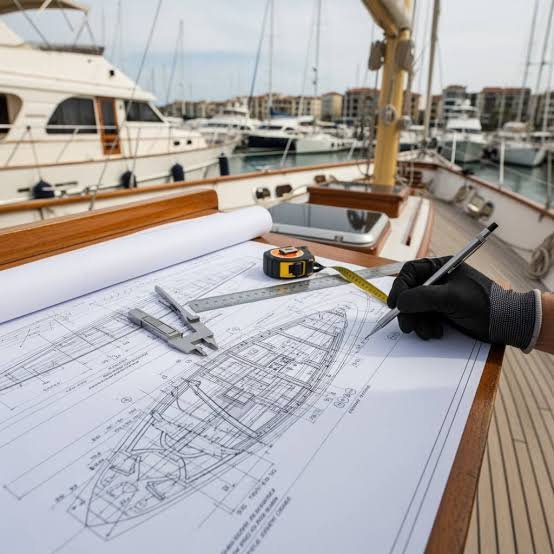
Ship design is one of the most important disciplines behind modern marine transportation, offshore operations, defense vessels, research ships, ferries, cruise liners, and cargo fleets. At its core, Naval Architecture and Ship Design is the science and engineering process of creating vessels that are safe, efficient, stable, durable, and suitable for their intended mission. Every ship, whether it carries containers across oceans or supports offshore wind farms, begins with careful planning, technical calculations, and design decisions that affect performance for decades.
Unlike ordinary product design, ship design must account for harsh marine environments, heavy loads, changing sea conditions, international safety regulations, fuel efficiency, construction cost, crew comfort, and long-term maintenance. Therefore, Naval Architecture and Ship Design combines engineering, physics, hydrodynamics, structural analysis, machinery layout, safety planning, and operational strategy. A good vessel is not simply built to float; it is designed to perform reliably under demanding conditions.
In this guide, you will learn what Naval Architecture and Ship Design means, why it matters, how the design process works, and which major factors influence the final vessel. Whether you are a marine engineering student, shipping professional, shipyard planner, or someone interested in modern vessel engineering, understanding the fundamentals of ship design will help you appreciate how complex and valuable this field truly is.
Naval Architecture and Ship Design refers to the professional discipline of designing, analyzing, and developing ships and marine structures. Naval architects are responsible for shaping the vessel’s hull, calculating stability, selecting materials, planning structural strength, estimating resistance, optimizing propulsion, and ensuring that the ship complies with maritime safety standards. In simple terms, they turn an operational requirement into a vessel that can safely and efficiently work at sea.
The ship design process usually begins with identifying the vessel’s purpose. For example, a container ship must maximize cargo capacity and fuel efficiency, while a passenger ferry must prioritize safety, comfort, speed, and easy boarding. Similarly, an offshore support vessel needs strong maneuverability, deck space, dynamic positioning systems, and the ability to operate near oil platforms or wind farms. Because every vessel has a different mission, Naval Architecture and Ship Design must be customized rather than copied from one project to another.
A major part of ship design is balancing competing priorities. A wider hull may improve stability, but it can also increase resistance and fuel consumption. A lighter structure may reduce operating costs, but it must still be strong enough to handle waves, cargo loads, and fatigue stress. More powerful engines can improve speed, yet they may require more fuel, larger machinery spaces, and higher maintenance costs. Therefore, Naval Architecture and Ship Design is about finding the best practical compromise between safety, performance, cost, and functionality.
Modern ship design also depends heavily on technology. Naval architects use computer-aided design software, computational fluid dynamics, digital modeling, structural simulation, and performance prediction tools. These systems allow designers to test hull forms, analyze wave behavior, improve energy efficiency, and detect potential design weaknesses before construction begins. As a result, today’s vessels are more advanced, environmentally responsible, and operationally efficient than ever before.
The first major element of Naval Architecture and Ship Design is the hull form. The hull determines how the vessel moves through water, how much resistance it faces, how stable it remains, and how efficiently it uses fuel. A well-designed hull reduces drag, improves seakeeping, and allows the ship to perform safely in different weather conditions. For high-speed vessels, designers often focus on slender hulls and smooth water flow. For cargo ships, the emphasis may be on volume, strength, and fuel economy.
Another essential element is stability. A ship must remain upright and safe even when exposed to waves, wind, turning forces, cargo movement, or uneven loading. Stability calculations help designers understand how the vessel behaves when it heels, rolls, or encounters rough seas. Poor stability can lead to dangerous operating conditions, so Naval Architecture and Ship Design always includes detailed stability analysis. This is especially important for passenger vessels, tankers, offshore vessels, and ships carrying heavy or shifting cargo.
Structural design is equally important. Ships experience constant stress from waves, cargo weight, vibration, machinery loads, and corrosion. The internal structure, including frames, bulkheads, decks, girders, and plating, must be strong enough to protect the vessel throughout its service life. However, adding too much steel increases weight and reduces efficiency. Therefore, Naval Architecture and Ship Design requires careful material selection and structural optimization.
Propulsion and machinery layout also play a central role. Designers must decide what type of engine, propeller, shaft system, fuel system, cooling arrangement, and power generation setup will best support the vessel’s mission. Some ships use conventional diesel engines, while others may use hybrid propulsion, LNG fuel, battery systems, or advanced electric drives. As environmental regulations become stricter, ship design now gives greater attention to emissions reduction, energy-saving devices, and alternative fuels.
Finally, the general arrangement of the vessel must support safe and efficient operations. This includes cargo spaces, crew accommodation, bridge visibility, emergency exits, engine rooms, tanks, cranes, ramps, lifesaving equipment, and maintenance access. A successful design must not only look good on paper but also work practically for crew members, operators, shipyards, and owners.
Read Also: How Adoption Strengthens Network Effects
The process of Naval Architecture and Ship Design usually begins with concept development. At this stage, the owner or operator defines the purpose of the vessel, expected route, cargo type, passenger capacity, speed, range, budget, and regulatory requirements. Naval architects then prepare early design options to determine the vessel’s approximate size, hull shape, displacement, power needs, and operating profile. This concept phase is critical because early decisions strongly affect cost, performance, and construction complexity.
After the concept is approved, the preliminary design stage begins. Here, naval architects refine the hull form, calculate hydrostatics, estimate resistance, evaluate stability, and prepare basic layouts. They also consider class society rules, international maritime regulations, port limitations, draft restrictions, cargo handling systems, and safety requirements. During this stage, Naval Architecture and Ship Design becomes more technical, with calculations and models used to test whether the vessel can meet its required performance.
The next stage is contract design or basic design. This includes more detailed drawings, specifications, machinery plans, structural arrangements, electrical systems, piping layouts, and equipment selection. Shipowners use these documents to estimate costs, invite shipyard bids, and finalize contracts. Because shipbuilding is expensive, clear documentation is essential. A small design mistake can lead to costly modifications later, which is why accuracy is a major priority in Naval Architecture and Ship Design.
Once the project moves into detailed design, engineers prepare production drawings for the shipyard. These drawings guide steel cutting, block construction, welding, outfitting, machinery installation, painting, and final assembly. Modern shipyards often build vessels in sections or blocks, which are later joined together. During construction, naval architects and marine engineers may review design changes, solve technical issues, and ensure that the ship remains aligned with the approved plan.
Before delivery, the vessel undergoes inspections, harbor trials, sea trials, stability tests, machinery checks, navigation system testing, and safety verification. Sea trials confirm that the ship performs as expected in real conditions. If the vessel meets the required standards, it is delivered to the owner. In this way, Naval Architecture and Ship Design continues from the first idea all the way to final operation.
Safety is one of the strongest reasons why Naval Architecture and Ship Design is so important. Ships operate far from shore, often in unpredictable weather, heavy seas, and remote environments. A poorly designed vessel can face serious risks, including structural failure, capsizing, machinery breakdown, flooding, fire hazards, and poor maneuverability. Good ship design reduces these risks by applying proven engineering principles, safety margins, watertight subdivision, emergency systems, and compliance with international standards.
Efficiency is another major factor. Shipping companies spend significant money on fuel, maintenance, crew, port operations, and repairs. A well-designed vessel can reduce fuel consumption, increase cargo capacity, improve speed control, and lower operating costs. Even small improvements in hull resistance or propulsion efficiency can produce major savings over the life of a ship. For this reason, Naval Architecture and Ship Design has a direct impact on business profitability.
Environmental performance has also become a major priority. Modern vessels must meet stricter emissions rules and reduce their environmental footprint. Designers now consider cleaner fuels, optimized hull coatings, waste management systems, ballast water treatment, energy recovery systems, and hybrid propulsion technologies. As global shipping moves toward greener operations, Naval Architecture and Ship Design plays a key role in creating more sustainable marine transport.
Another reason ship design matters is crew and passenger comfort. A vessel must be safe, but it should also support people who live and work onboard. Noise, vibration, ventilation, lighting, cabin layout, bridge ergonomics, and safe working areas all affect daily operations. For cruise ships, ferries, and research vessels, comfort and usability are especially important.
In addition, good ship design improves reliability. A ship that is easy to maintain, inspect, and repair will spend less time out of service. Proper equipment access, corrosion protection, redundancy, and smart system layout can make long-term operation much easier. Ultimately, Naval Architecture and Ship Design protects human life, improves marine performance, supports commercial success, and helps vessels operate responsibly in challenging environments.
The future of Naval Architecture and Ship Design is being shaped by digital technology, automation, sustainability, and changing global trade needs. One of the biggest trends is the use of digital twins. A digital twin is a virtual model of a ship that can monitor performance, predict maintenance needs, and help operators make better decisions. By combining sensors, data analysis, and simulation, shipowners can understand how a vessel behaves throughout its life cycle.
Another important trend is alternative propulsion. Traditional diesel engines are still widely used, but the industry is exploring LNG, methanol, hydrogen, ammonia, batteries, fuel cells, and hybrid systems. Each option has advantages and limitations, so naval architects must design vessels around fuel storage, safety, range, engine compatibility, and future regulations. As a result, Naval Architecture and Ship Design is becoming more closely connected to energy strategy.
Autonomous and remotely operated vessels are also becoming more relevant. Although fully unmanned ocean-going ships are not yet common, automation is already improving navigation, monitoring, engine control, and collision avoidance. Future ship design may require new bridge layouts, remote operation centers, advanced sensors, cybersecurity systems, and backup controls.
Sustainability will continue to influence ship design decisions. Designers are focusing on lightweight structures, efficient hull forms, air lubrication systems, wind-assisted propulsion, solar support systems, and recyclable materials. These innovations can help reduce fuel use and emissions while improving long-term value.
Finally, the demand for specialized vessels is growing. Offshore wind support vessels, research ships, LNG carriers, expedition cruise vessels, and smart cargo ships all require advanced design solutions. Because maritime operations are becoming more technical, Naval Architecture and Ship Design will remain essential for building vessels that are safer, cleaner, smarter, and more efficient.
Naval architecture is the engineering discipline that deals with the design, construction, stability, strength, and performance of ships and marine structures. Ship design is the practical process of creating a specific vessel. In many cases, Naval Architecture and Ship Design work together as one complete field.
Ship stability determines whether a vessel can remain upright and safe during loading, turning, wave impact, and rough weather. Stability is one of the most critical parts of Naval Architecture and Ship Design because poor stability can create serious safety risks.
Modern ship design often uses CAD tools, hydrodynamic modeling software, structural analysis programs, computational fluid dynamics, and 3D ship modeling platforms. These tools help naval architects improve accuracy, performance, and construction planning.
The timeline depends on vessel size and complexity. A small workboat may take a few months to design, while a large commercial ship, naval vessel, or cruise ship can require several years from concept to delivery.
An efficient ship design has a balanced hull form, optimized propulsion, strong but lightweight structure, practical layout, low resistance, good fuel economy, and compliance with operational requirements. Efficiency is a core goal of Naval Architecture and Ship Design.
Ship design is a complex but essential field that supports global trade, offshore energy, passenger transportation, defense operations, and marine research. Through Naval Architecture and Ship Design, engineers create vessels that are safe, stable, efficient, durable, and suitable for demanding sea conditions. From hull form and stability calculations to propulsion systems, structural strength, environmental performance, and final construction, every decision affects how a ship performs throughout its life.
As the maritime industry moves toward cleaner fuels, smarter vessels, automation, and digital monitoring, the importance of Naval Architecture and Ship Design will continue to grow. A well-designed ship is not just a floating structure; it is a carefully engineered system built to protect people, move goods, reduce costs, and operate responsibly on the world’s oceans.